

Introduction: Why Your 'Free' WhatsApp & Excel System is Secretly Costing Your Business a Fortune

It's 9:40 on a Monday morning. Your IndiaMart dashboard shows six new enquiries. TradeIndia has two more. A Facebook ad lead pinged someone's personal WhatsApp over the weekend, and nobody replied. Sound familiar?
Most Indian MSMEs run on this kind of setup. An Excel sheet here, a WhatsApp chat there, and a sales rep who "will remember to call back." It feels free. No monthly bill, no login, no training. But it isn't free. Not even close.
The Price Tag You Never See
Here's the thing about manual tracking: the cost doesn't show up on any invoice. It shows up as a lead nobody called, a quote that went out two days late, or a rep who left and took 400 customer chats on his personal phone.
Speed matters a lot here. One 2026 analysis from Nummero reported that Indian leads contacted within 60 seconds converted at 28 to 32%, versus just 3 to 4% after an hour. (Their method isn't fully documented, so treat it as a direction, not gospel.) The point still stands. Slow follow-up quietly kills deals.
And your team's time? Salesforce's 2026 India survey found that Indian sellers spend only 41% of their working time actually selling. The rest goes to admin, copying details, and chasing reminders. Paying people to do that? Expensive.
Cheapest Isn't the Same as Best
So the obvious fix is a CRM. But then comes the next headache. One tool says ₹799 per user. Another says ₹1,500 a month for "unlimited users." A third forgets to mention Meta message fees, GST, and setup. Confusing, right?
That's exactly why this guide exists. We'll break down what a WhatsApp CRM really costs in India in 2026, which fees hide behind the monthly price, and how to work out your own return. The goal isn't to find the cheapest tool. It's to find the best WhatsApp CRM for how your business actually sells.
First up, let's look at how these tools charge in the first place.
Section 1: Deconstructing WhatsApp CRM Pricing Models in 2026
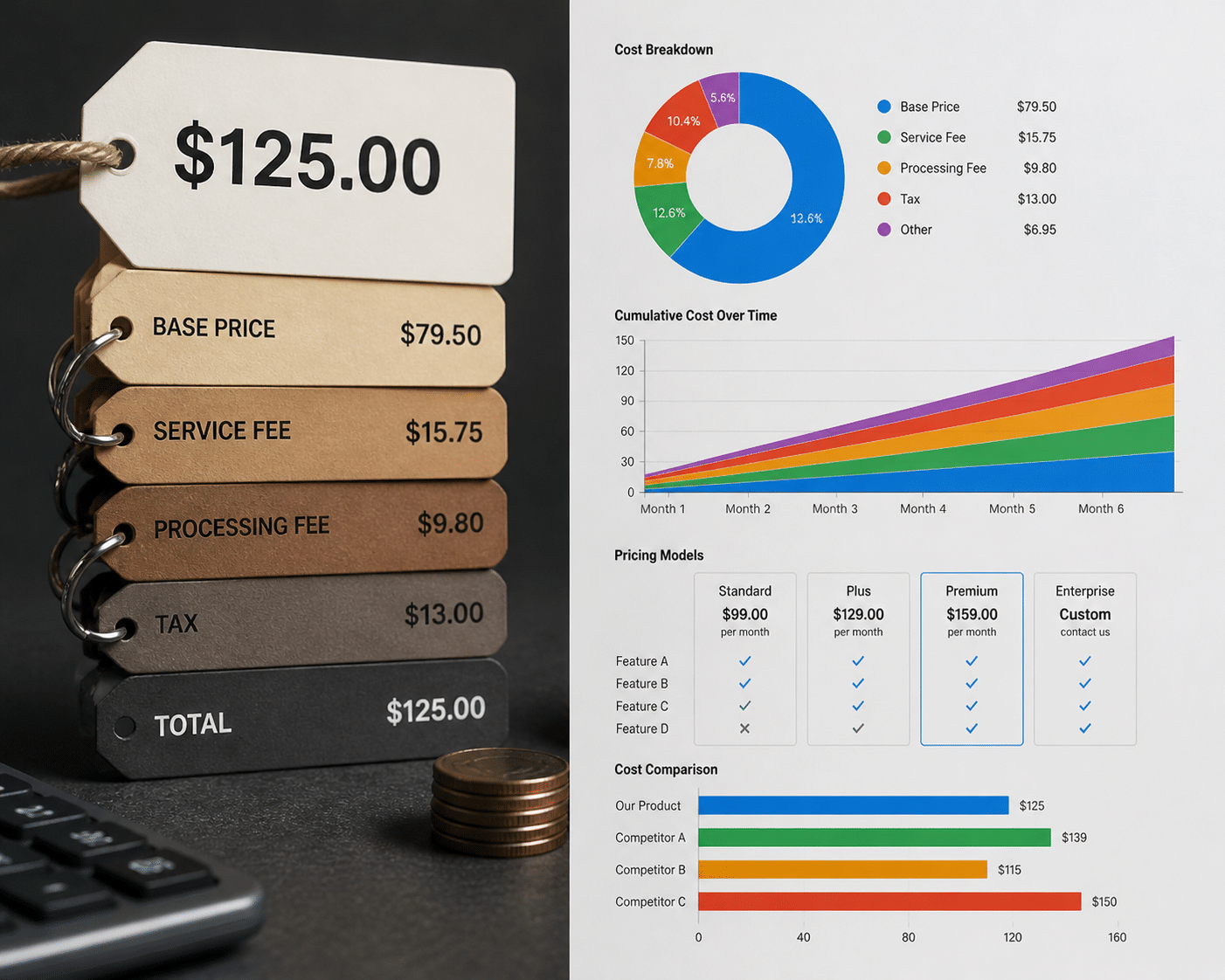
Pricing pages all look different, but almost every WhatsApp CRM in India charges in one of three ways. Once you spot the pattern, comparing tools gets a lot easier.
Per-User Pricing: You Pay for Every Seat
This is the classic model. Each salesperson gets a login, and each login costs money. Zoho CRM Standard sits around ₹800 per user per month on annual billing, and some per-user WhatsApp CRMs land between ₹799 and ₹999 per user, according to ViveLead.
For a team of five, that's friendly. For fifteen? Your bill triples. And if your managers, support staff and part-timers all need access, those seats add up fast.
Tiered and Usage-Based Pricing
Tiered plans bundle features at set prices. A basic tier gets you a shared inbox, a higher one adds chatbots and automation. Some tiers also cap your users. WATI's plans, for example, include a limited number of agents, so a growing team may get pushed up a tier just to add one more rep.
Usage-based pricing is different. You pay for what you use: contacts stored, messages sent, automation runs. AiSensy pairs a flat plan with unlimited users but still charges per message and for chatbot add-ons. Quiet month, small bill. Big campaign month? Brace yourself.
Pricing Model Showdown: Per-User vs. Tiered vs. Usage-Based
Model | Best For | Potential Pitfalls | Example Scenario |
|---|---|---|---|
Per-User | Small, fixed sales teams that need clear ownership and reporting | Cost climbs with every hire; managers and support staff need seats too | 4 reps, low lead volume, needs pipelines and activity history |
Tiered | Teams that want automation, broadcasts and chatbots in one package | User caps and feature walls can force an early upgrade | 8 reps, steady IndiaMart leads, wants follow-up automation |
Usage-Based | Businesses with swinging campaign volumes | Bills are hard to predict; add-ons and message credits pile up | Seasonal textile seller running two big broadcasts a year |
The Hybrid Reality
Here's the twist. Most all-in-one platforms mix all three. You might see a tiered plan, a user limit, and message fees on top. Kylas, for instance, lists a flat ₹12,999 monthly plan with unlimited users, which can look steep for five reps but cheap for fifteen.
Platforms like Leadopal follow this bundled idea too, putting lead capture, WhatsApp, email, SMS and invoicing under one plan instead of selling each separately.
Matching the Model to Your Business
There's no single winner. Think about two things: how many people will actually use the tool, and how many leads you handle.
Few reps, modest leads: per-user is usually fine.
Few reps, tons of leads: a feature-tiered plan often beats paying for seats you don't need.
10 to 15 reps sharing one inbox: flat or unlimited-user plans tend to win.
Campaign-heavy business: watch usage costs closely.
One warning before you pick. The subscription is only part of the bill, and the next section covers what hides behind it.
Section 2: The Hidden Fees: What's Not Included in the Monthly Subscription
So you've picked a pricing model. The page says ₹2,999 a month. Then the first invoice lands, and it says something closer to ₹4,700. Where did the extra go?
Usually, it went to the stuff that never made the pricing page.
Meta's Message Fees: The Biggest Surprise
Quick correction first. Plenty of guides still talk about "conversation charges." Meta dropped that on July 1, 2025, and now bills per delivered message. The India rates below come from Gupshup's October 2026 INR rate sheet.
Who starts the chat | Message type | Meta rate per message |
|---|---|---|
Business | Marketing (offers, campaigns) | ₹0.8631 |
Business | Utility (order updates, invoices) | ₹0.1150 |
Business | Authentication (OTPs) | ₹0.1150 |
Customer | Service replies | ₹0.1150 after the free allowance |
The customer-started side is kinder. One report on Meta's changes says each Indian business number gets 1,000 free service messages a month. After that, it's ₹0.115 each.
Now the math. A broadcast to 2,000 customers costs ₹1,726 at Meta's marketing rate. But many Indian providers add roughly 10 to 30% on top of Meta's rates. That same broadcast could land at ₹1,900 to ₹2,244, before 18% GST. Ouch.
Setup, Integrations and Support
One-time costs are where budgets really get surprised. One 2026 benchmark puts a mid-tier CRM implementation at ₹50,000 to ₹2,00,000, with basic small-team setups at ₹15,000 to ₹50,000. That covers user roles, pipelines, data import, training and go-live help.
Lead source connections can cost extra too. RichAutomate's guide notes that IndiaMART's Leads API access sits inside IndiaMART's own paid seller packages. It also lists ₹0.10 per message on its platform. For TradeIndia, I couldn't find any standard public fee. Providers often quote it as custom work. And if there's no native connector, you might pay for Make, Pabbly or a developer to build custom webhooks.
Contact storage limits and dedicated support are the same story. I couldn't find standard prices, and they vary a lot. So ask before you sign.
Email and SMS: Even "All-in-One" Has Meters
A bundled platform doesn't always mean unlimited sending. Email tools usually charge by contact count. Zoho Campaigns is one example. As a rough estimate (not an official price), standalone email for 5,000 contacts runs about ₹1,500 a month. SMS often runs on credits.
Platforms like Leadopal bundle email, SMS and WhatsApp together. That's handy, but it's still smart to ask what sending limits each plan includes.
The Anatomy of Your WhatsApp CRM Bill
Bill layer | What to ask | Typical cost pattern |
|---|---|---|
Base subscription | How many users, contacts and numbers are included? | Monthly or quarterly fee |
Meta message fees | Are they passed through at cost? | Per delivered message |
Provider markup | Is there a percentage on top? | Often 10 to 30% |
GST | Is the quote before or after tax? | 18% |
Setup and onboarding | Is it one-time? What does it cover? | ₹15,000 to ₹2,00,000 for full CRM projects |
Integrations | Native connector or paid middleware? | Varies by source |
Email and SMS | What are the contact and credit limits? | Contact tiers or credits |
Support and storage | Is dedicated help or extra storage charged? | Ask for a quote |
Hidden fees are only half the story, though. Next, let's see what you save by putting everything under one roof.
Section 3: Cost-Benefit Analysis: All-in-One Platforms vs. Disconnected 'Point' Solutions
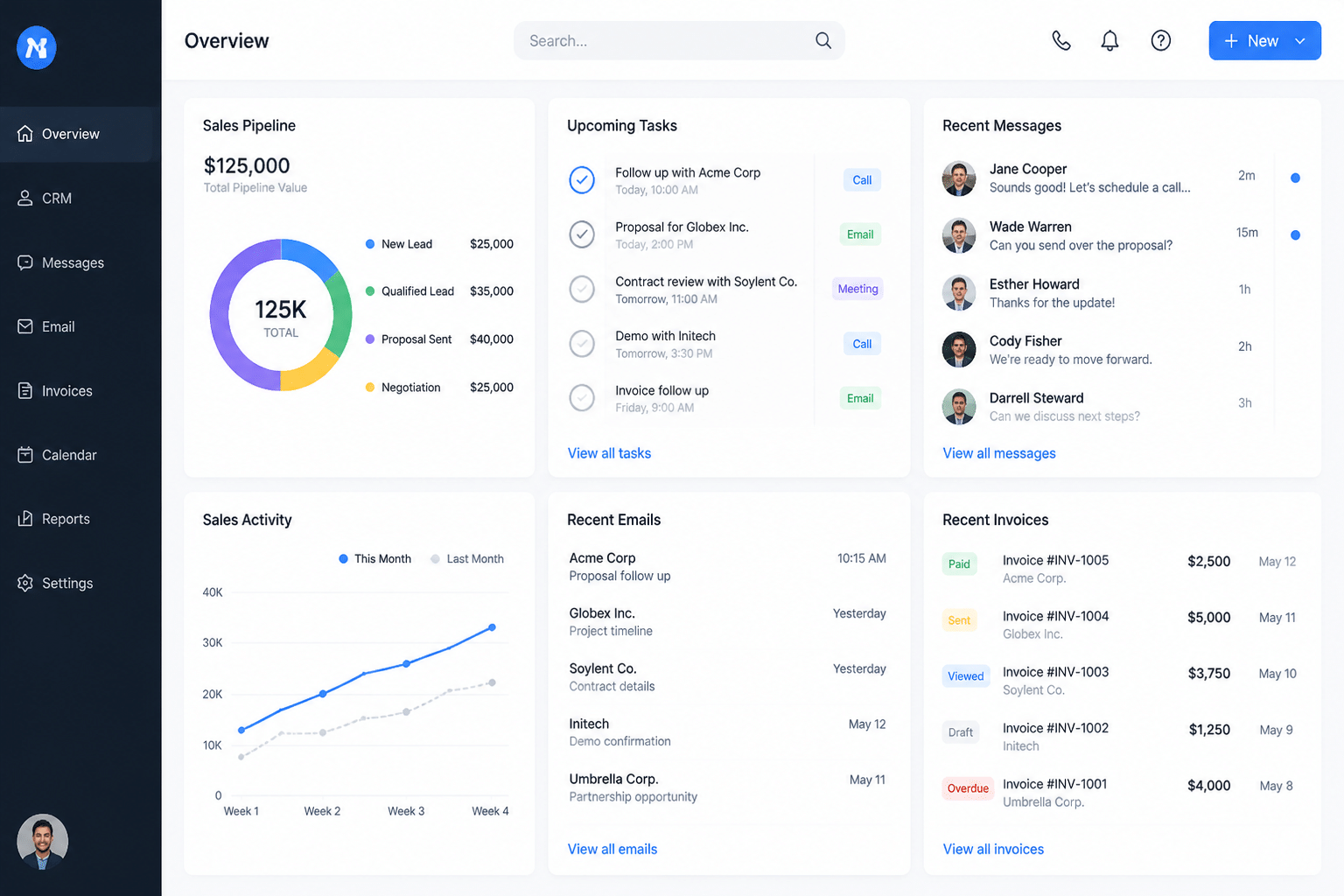
Here's a question I'd ask any owner with a five-person sales team. How many logins does your team open before lunch? One for the CRM, one for WhatsApp broadcasts, one for email, one for SMS, one for invoices. Five tabs. Five bills.
Each tool looks cheap on its own. Together, they're a different story.
Adding Up the Stack, Tool by Tool
Let's price a typical disconnected setup for five reps. These are monthly figures before 18% GST and before Meta's message fees (which you'd pay either way). Some numbers come from earlier in this guide. A few are my own rough estimates, and I've marked them.
Cost item | Point solutions (5 reps) | All-in-one platform |
|---|---|---|
CRM | ₹4,000 (Zoho CRM Standard, 5 x ₹800) | Included |
WhatsApp tool | ₹2,999 (WATI Growth, monthly billing) | Included |
Email marketing | ₹1,500 (estimate for 5,000 contacts) | Included |
SMS service | ₹1,000 (rough estimate) | Included |
Invoicing (Zoho Invoice/Tally type tool) | ₹800 (rough estimate) | Included |
Integration and manual labor | About ₹10,000 (see below) | Close to zero with native connectors |
Total monthly cost | About ₹20,300 | One bundled fee |
See the pattern? The subscriptions alone come to roughly ₹10,300. That's before anyone does any copying and pasting.
So here's a simple test. If an all-in-one quote lands below about ₹10,300 a month for your team, you're ahead before counting a single saved hour. WATI's pricing, by the way, is listed in this provider comparison.
Want to stop losing leads?
See how Lead Opal helps you capture, track, and follow up on every lead — automatically, across WhatsApp, Email & SMS.
The Invisible Costs Nobody Puts on an Invoice
That ₹10,000 labor line deserves a quick explanation. I assumed each rep loses about 30 minutes a day moving details between tools. That's 13 hours a month per rep, about 65 hours for five. At ₹150 an hour, you get roughly ₹9,750, plus a bit for middleware like Pabbly.
Is 30 minutes fair? Probably on the low side. A LinkedIn post from Zopkit claims Indian B2B teams spend 2+ hours daily on manual CRM work. It's a company post, not a proper study, so take it as a direction. Still, my guess is you've felt it.
Time isn't the only leak. Three more costs hide in disconnected tools:
Typing errors. A wrong phone digit or a mismatched GST number means a lost lead or a rejected invoice.
Stale data. The CRM says "interested." The WhatsApp chat says "cancelled." Nobody knows which is true.
No single source of truth. Want to know which IndiaMart lead became paid revenue? You'd be stitching together five reports by hand.
That last one stings the most. You can't fix what you can't see.
Where an All-in-One Platform Fits
This is where a platform like Leadopal comes in. It puts lead capture (IndiaMart, TradeIndia, JustDial, Facebook and Google Ads), the WhatsApp shared inbox, email, SMS, automation, and quotations and invoices into one system. For anyone searching for a CRM with WhatsApp and invoicing, that's the whole idea: one login, one pipeline, one dashboard.
The savings come from two places. First, you stop paying five vendors, so the total cost of ownership for your WhatsApp CRM drops. Second, leads flow straight from source to chat to quote to invoice, so nobody retypes anything. Unified analytics then show which channel actually brings paying customers.
Is it always cheaper? No. A solo founder sending twenty messages a month may be fine with one basic tool. But for a team handling steady marketplace leads, bundles usually win.
So you've got the cost side. Next, we'll turn this into a return you can actually calculate for your own business.
Section 4: How to Calculate the True ROI of the Best WhatsApp CRM for Your Business
You now know what the bill looks like. But is it worth paying? Let's work that out with plain math, no finance degree needed.
The Simple ROI Formula
Here it is: ROI = (Gains - Cost) / Cost. Multiply by 100 to get a percentage. HubSpot's CRM business case guide uses the same idea.
"Cost" is your full monthly bill from the earlier sections: subscription, Meta message fees, GST, and setup spread over 12 months. "Gains" means three things:
Rescued leads: the profit from deals you would have lost to slow or missing follow-up.
Time saved: hours freed up, multiplied by what each hour costs you.
Faster invoicing: money recovered through quicker quotes, fewer invoice errors and earlier payments.
One tip. Use profit, not sales value. Otherwise a CRM can look like a winner while the deals barely pay.
A Worked Example for an Indian Trading Company
Picture a building materials trader with 5 reps and about 150 IndiaMart enquiries a month. Some go unanswered for hours. Say the CRM's instant alerts and auto-assignment rescue just 2 to 3 extra deals a month. That's a cautious guess, honestly. These numbers are my assumptions, so swap in your own.
Line item | Monthly figure |
|---|---|
Average order value | ₹80,000 |
Profit margin | 20% (₹16,000 per deal) |
Rescued deals (2 / 3) | ₹32,000 / ₹48,000 |
Time saved (65 hours at ₹150) | ₹9,750 |
Faster invoicing and fewer errors (estimate) | ₹2,000 |
Total gains (2 deals / 3 deals) | ₹43,750 / ₹59,750 |
Total monthly cost (assumed, incl. GST and messages) | ₹13,000 |
Now plug it in. With 2 extra deals: (43,750 - 13,000) / 13,000 = 2.37, so about 237% ROI. With 3 deals, it's roughly 360%.
See what carries the result? The rescued deals, not the time savings. And the time only counts if reps actually spend it selling, which matters since Indian sellers spend just 41% of their day on that, as we saw earlier.
Want to run your own numbers? This public Google Sheets ROI calculator is a decent starting point. Copy it, then add your message fees and subscription.
The Gains That Don't Fit in a Cell
Some returns won't show up in a spreadsheet. They're still real.
Professional image. Replies from an official business number, plus clean quotes and GST invoices, look more trustworthy than a rep's personal WhatsApp and a Word file.
Accountability. When every chat, follow-up and target sits in one place, nobody has to guess who dropped the ball.
Better customer data. Years of chats and purchases become a list you can segment for the next festive-season campaign.
A platform like Leadopal bundles these pieces (pipeline, WhatsApp inbox, targets, invoicing), so those intangibles come along with the main features rather than as extras.
So the math can work. But which features actually deserve your money? That's next.
Section 5: A Practical Checklist for Choosing a Cost-Effective WhatsApp CRM in India

You've seen the pricing models, the hidden fees and the ROI math. Now comes the part where you actually talk to vendors. And here's the thing: a good sales call can make every plan sound cheap. Questions fix that.
Questions to Ask Before You Sign
Print this table or paste it into your notes app. Then ask every vendor the same things, so you compare apples to apples.
Ask this | Why it matters | A good answer sounds like |
|---|---|---|
Does your price include WhatsApp API message charges? | Meta bills per delivered message, and some providers add 10 to 30% on top | "Meta fees are passed through at cost, and here's the markup in writing" |
Is this quote before or after 18% GST? | A quote that skips tax can be 18% off | "The total with GST is ₹X" |
Are there limits on IndiaMart or TradeIndia integrations? | Some connectors are paid add-ons or custom work | "Both are native. No middleware needed" |
What happens to my bill at 10 or 15 users? | Seat caps force surprise upgrades | "Here's the exact price at each step" |
What are the contact and storage limits? | Big lead lists can trigger overage fees | "Limits are listed, and overage rates are fixed" |
Is setup or onboarding extra? | One-time fees can run into the thousands | "Onboarding is included, or priced upfront" |
Do you use the official WhatsApp API? | Unofficial tools risk account bans | "Yes, and we'll name our provider" |
Can I export my data if I leave? | Locked data makes switching painful | "Export anytime, in standard formats" |
One more thing to check: auto-renewal clauses and refund rules on annual plans. They're boring. They're also where people get stuck.
Features That Quietly Cancel Other Bills
Some features pay for themselves by killing a separate expense. Two stand out.
Built-in invoicing. If quotes and GST invoices live inside the CRM, you can drop that ₹800 invoicing tool from our earlier stack math. Plus, nobody retypes a customer's details.
A no-code automation builder. Lead routing and follow-up reminders should be drag and drop. If a developer has to build them, you're paying a freelancer every time your process changes.
Also, don't ignore the basics. A 2026 CRM buying guide lists task and follow-up reminders among the day-one requirements. Fancy AI replies can wait until your team actually follows up on time.
Pick a Tool Built for How Indian MSMEs Sell
A global CRM can look polished and still miss your daily routine. So look for three India-specific things:
GST-compliant invoicing, with tax details that print correctly.
Local marketplace know-how, meaning IndiaMart, TradeIndia and JustDial leads land in one pipeline without hacks.
India-centric support, ideally people who reply in your time zone and understand your business.
Leadopal is one example built around that workflow, bundling marketplace lead capture, a WhatsApp shared inbox, automation and invoicing together. Whichever tool you shortlist, test it with a real week of leads before committing.
Once you've got your shortlist, there's just one thing left: tying the whole cost question together.
Conclusion: Investing in Value, Not Just a Price Tag
So, what's the real cost of a WhatsApp CRM? It's not the number on the pricing page. It's the leads you lose, the hours your team wastes, and the data scattered across five tools.
The best WhatsApp CRM isn't the cheapest one. It's the one that fixes your most expensive problems. For an Indian MSME, that means looking at total cost of ownership: the subscription, Meta message fees, GST, setup, integration gaps and manual work. Add those up honestly, and a bundled tool often wins.
Your Top 3 Takeaways
# | Takeaway | Why it matters |
|---|---|---|
1 | The monthly price is only one layer of the bill | Meta fees, markups, GST and setup can push your real cost well above the quote |
2 | Fragmented tools cost more than they look | Five subscriptions plus copy-paste work add up fast |
3 | Judge a CRM by ROI, not price | Rescued leads and faster follow-up usually pay for the tool |
There's some research behind this value-first thinking. A 2025 Insightly and Ascend2 study found that teams with full CRM adoption were twice as likely to report a very positive impact on sales efficiency, 59% versus 23%. A tool only pays off when your team actually uses it.
Your Next Step
Here's a simple way to start this week. List what you pay today for your CRM, WhatsApp tool, email, SMS and invoicing. Then add the hours your reps spend moving details between them. Next, count the IndiaMart or TradeIndia leads that got a late reply (or none at all). That's your hidden cost.
Then compare it with a unified option built for how Indian MSMEs sell. If you'd like to see what a bundled setup could look like for your team, take a look at Leadopal and run your own numbers. No pressure. Just better math.