

Introduction: Your Sales Team Lives on WhatsApp. Why is Your CRM Still in the Dark?

Picture this. A buyer sends your rep a message at 8pm asking for a quote. The rep replies from his personal phone, promises to send details tomorrow, and then forgets. Your CRM (or that Excel sheet) never hears about it. Sound familiar?
Here's the thing: WhatsApp isn't just a chat app for Indian MSMEs anymore. It's where deals actually get closed. A 2026 benchmark of 527 Indian SMBs found that 67% use WhatsApp as their primary sales channel. That's vendor research, not an official national number, so take it as a strong hint rather than gospel. But if you run a sales team, you probably already feel it.
The trouble is the gap. Your real conversations sit on personal phones. Your structured data sits somewhere else. Nobody can see the full picture, and when a rep quits, the chat history walks out with them. Leads slip. Follow-ups get missed. You, the owner, are left guessing.
That's exactly what a WhatsApp marketing CRM fixes. In this guide, we'll look at how to integrate WhatsApp with a CRM, which path suits an Indian MSME, and what to look for in 2026. The goal is simple: faster replies, more closed deals, and you back in control.
Why Traditional Sales Channels are Taking a Backseat to WhatsApp in India
Email still has its place. But ask any wholesaler in Surat or Ludhiana when they last got a deal closed over email, and you'll probably get a laugh.
The Numbers Behind the Shift
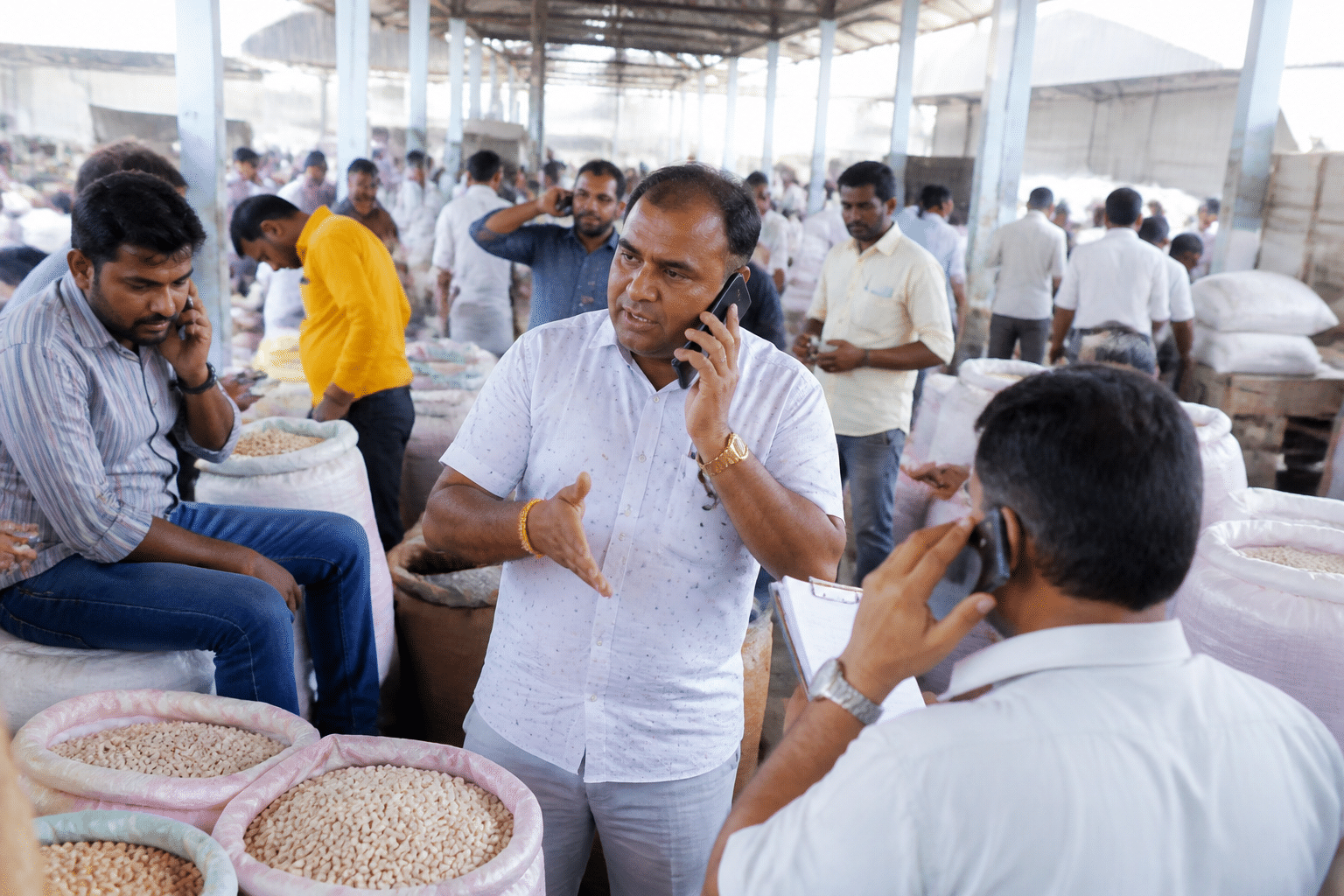
Let's start with attention. One 2026 comparison from Times Mobile puts WhatsApp open rates at 95 to 98%, against roughly 20% for email. These are industry estimates, not audited Indian numbers, so treat them as a rough guide. Still, the gap is huge.
Channel | Typical open rate | Typical click rate | Best for |
90 to 98% | 45 to 60% | Quick follow-ups, quotes, negotiation | |
20 to 25% | 2 to 5% | Long documents, formal records | |
SMS | 82 to 98% | 6 to 8% | OTPs, short alerts |
SMS gets seen too. But people rarely reply to it. WhatsApp gets replies.
Buyers seem to prefer it that way. A Facebook-commissioned survey, cited by Indian WhatsApp providers, found 64% of people would rather message a business than call. And a 2025 Kantar study, reported by Meta, says 91% of online adults in India chat with a business every week.
Trust Moves Faster in a Chat
In Indian B2B and wholesale, deals run on relationships. Buyers want to feel they're talking to a real person, and they want to haggle. A chat thread feels personal in a way an email with a signature block never will. The buyer asks for a better rate, your rep replies in two minutes, and the whole negotiation wraps up before lunch. Try doing that over email!
More Than Just Chat
Here's the part people overlook. WhatsApp isn't only for typing. Inside one conversation, your team can share:
Product photos and PDF catalogues
Location pins, so a buyer finds your godown without five phone calls
Voice notes for quick explanations
Payment links and UPI QR codes
That's the whole sales cycle in one thread. Enquiry, quote, payment. No app-hopping.
But all that speed only helps if your CRM can see it. And that's where most businesses start losing money.
The High Cost of a Disconnected System: Where Your Business is Leaking Money
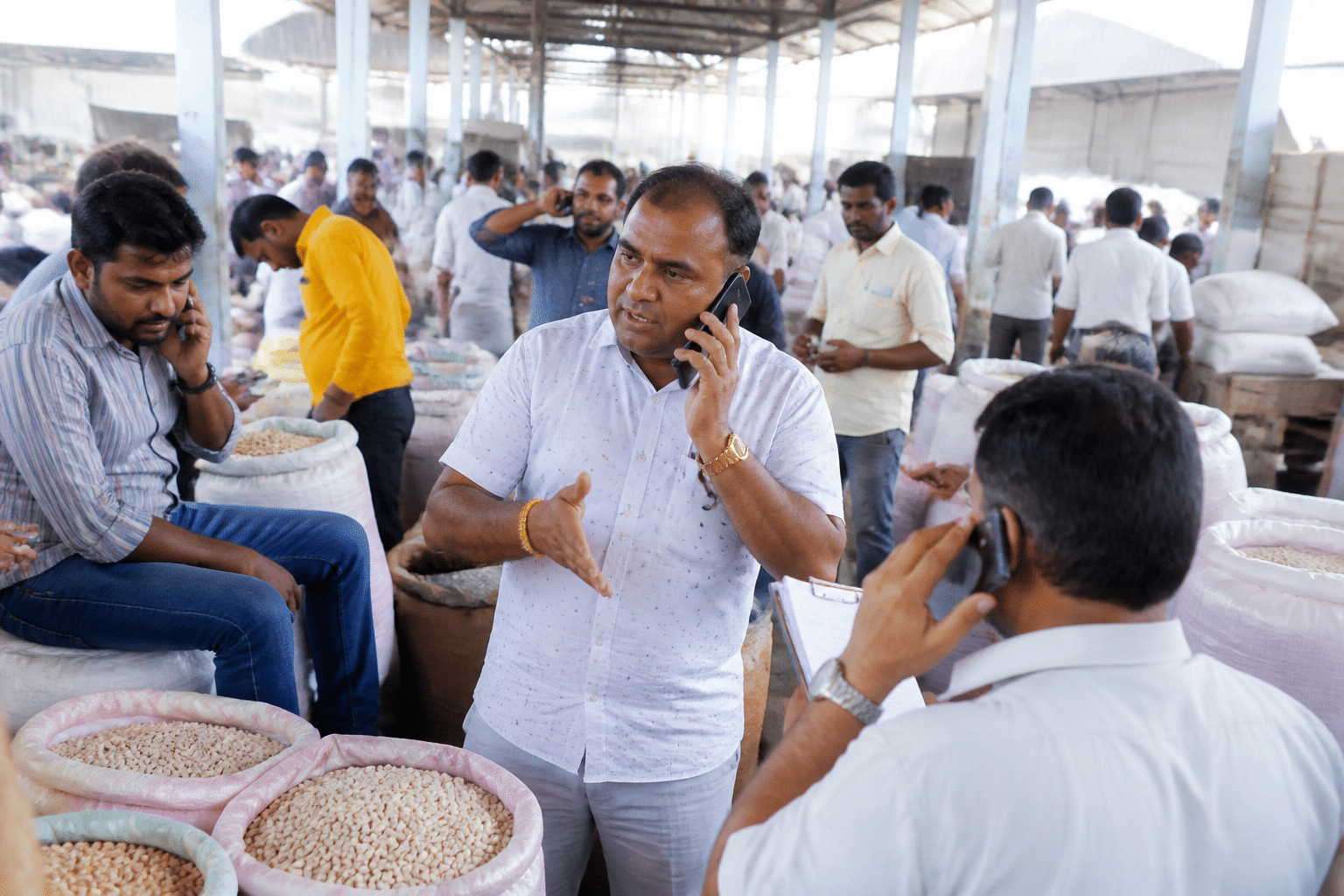
Nobody plans to lose leads. It just happens, a little at a time, in the gaps between your tools. And those gaps cost more than most owners think.
How a Lead Goes Missing
Say a buyer fills a Facebook form at 7pm. Another sends an enquiry on JustDial. A third pings you on IndiaMART. Each one lands in a different place, and someone has to notice, copy it, and pass it along.
Here's how that usually plays out:
Step | What happens | What it costs you |
1. Lead arrives | Sits in a separate dashboard or inbox | Nobody sees it for hours |
2. Manual handover | Someone forwards it in a WhatsApp group | Wrong rep, or no rep |
3. Rep replies | From a personal phone, no record kept | Manager can't see it |
4. Follow-up due | Rep is busy, no reminder fires | The buyer goes cold |
5. Lead gone | Competitor replies first | Money spent, nothing earned |
And you paid for that lead. B2B advertising leads in India commonly run ₹1,000 to ₹3,000 each, and the final sales conversion for manufacturers on IndiaMART is only about 3 to 5%. When so few leads turn into sales, losing even a handful hurts.
Speed matters too. In that same benchmark we looked at earlier, teams replying within 5 minutes closed 3.7 times more deals than those who waited an hour. That shows a link, not proof. Still, it's hard to ignore.
Managers Flying Blind
Now flip to your side of the desk. Can you tell which rep replied to which buyer today? Probably not.
When chats live on personal phones, you can't review quality, spot a rude reply, or step in when a deal stalls. And when someone leaves? Everything leaves with them. India's overall employee attrition was reported at 16.2% in 2025, and field sales roles in retail ran as high as 28.7%. On a five-person team, that's roughly one rep walking out each year, with their contacts, quotes and promises in their pocket.
Hours Lost to Copy-Paste
Then there's the grind. Reps copy names and numbers from WhatsApp into Excel, then type up notes later (if they remember). One sales workflow analysis says manual CRM entry eats about 13% of sales time. Another puts it at 3 to 6 hours per rep, every week.
Let's do rough math. Five reps, 4 hours a week each, at ₹300 an hour. That's about 1,040 hours and ₹3.12 lakh a year. It's my own scenario, not a published Indian average, but it shows the scale. Typos and missed entries come free of charge.
So the fix isn't working harder. It's getting WhatsApp, lead sources and follow-ups into one place, which is what a platform like Leadopal is built around. Next, let's look at the two ways to actually get there.
Two Paths to Integration: Choosing Your WhatsApp Marketing CRM Strategy
So you're sold on getting WhatsApp into your sales process. Good. Now comes the part where most owners get stuck: how, exactly?
There are two main roads. Neither is wrong. But they lead to very different places, and picking the wrong one can cost you months and a lot of rupees.
Path 1: The Connector Approach
This one's for businesses that already have a CRM they like. Maybe it's Zoho. Maybe Salesforce. You keep it, and you bolt WhatsApp onto the side.
Here's how it works. You sign up for the official WhatsApp Business API through a provider (these are called BSPs, short for Business Solution Providers). Then you use a connector, like Zapier or a ready-made plug-in, to pass messages and leads between WhatsApp and your CRM. So you end up with three moving parts talking to each other.
The upside? You keep your existing data and your team's habits. The catch is more handoffs. More handoffs mean more places where something can break or arrive late.
Path 2: The Native Platform Approach
The second road skips the stitching. You move to one all-in-one sales platform where the CRM, WhatsApp, email, SMS and other tools already live in the same system.
One login. One database. One place where a chat, a lead and a quote all sit together. Leadopal is built this way for Indian MSMEs, with the WhatsApp API, shared inbox and lead sources under one roof.
The trade-off is that you may need to move off your old setup. That takes some effort up front.
The Two Paths Side by Side
Factor | Path 1: Connector | Path 2: Native platform |
What you use | [Your CRM] + [Connector or middleware] + [WhatsApp API provider] | [One all-in-one sales and marketing platform] |
Number of tools | Three or more, each with its own bill | One |
Where data lives | Split across systems | In one place |
Setup | Needs mapping and testing | Usually faster |
Best if | You're already deep into a CRM | You're starting fresh or tired of juggling |
It's a Business Decision, Not a Tech One
Here's the thing. This isn't really an IT question. It's your call as the owner, and it comes down to four things:
Cost: What will you pay in total, not just the sticker price?
Complexity: Who fixes it when something stops syncing?
Current systems: How much do you rely on what you already have?
Future growth: Will it still work with 15 reps instead of 5?
There's no single right answer for everyone. Let's look closely at each path, starting with the connector.
Deep Dive on Path 1: Integrating WhatsApp API with Your Existing CRM
Let's say you love your CRM. Your team knows where every button is, and nobody wants to retrain. Fair enough. Here's what the connector route actually involves.
What You Need for a Connector-Based Integration
There are a few parts to line up before a single message flows.
[ ] An approved WhatsApp Business Account (Meta verifies your business first)
[ ] A registered BSP, the Business Solution Provider that gives you API access
[ ] A phone number that isn't already tied to a regular WhatsApp app
[ ] A CRM with API access (some cheaper plans lock this away)
[ ] A connector or middleware, like Zapier, or a ready-made plug-in
[ ] Meta-approved message templates for anything you send first
[ ] Someone who can test, fix and watch the setup after launch
That last one gets skipped a lot. Don't skip it.
What It Costs
Costs come in layers. Meta moved to per-delivered-message pricing on July 1, 2025, so you no longer pay per conversation. Marketing templates in India run roughly ₹0.86 per delivered message in 2026, and utility messages are about ₹0.115. Then your BSP adds its own fee. Small-business plans commonly sit around ₹1,500 to ₹5,000 a month, plus a small markup per message and 18% GST. And remember your connector tool has its own subscription too.
Prices shift often (and a few changes landed this October), so check the rate card inside your BSP account before you budget.
The Good Side
The biggest win is simple. Your team keeps the CRM they already know. No new login, no panic, no weeks of retraining. If you've poured years of data and custom fields into Zoho or Salesforce, that matters. For a business that's deeply invested in one CRM, this can be a sensible first step.
Where It Gets Messy
Honestly, the cons are what trip people up.
Setup takes work. Someone has to map fields, set up webhooks and test everything. Custom builds can run ₹2 lakh or more.
Integrations break. An expired token or a changed template can quietly stop messages.
Syncing isn't always instant. Some connectors check for new messages on a timer, so polling delays, missing attachments and stale status updates are common complaints.
The team inbox is often clunky. Many generic CRMs have no real shared inbox, so reps end up bouncing between screens.
So it can work. But you're the one holding the pieces together. Now let's see what the other road looks like.
Want to stop losing leads?
See how Lead Opal helps you capture, track, and follow up on every lead — automatically, across WhatsApp, Email & SMS.
Deep Dive on Path 2: The Power of a Native, All-in-One WhatsApp CRM
Now picture that same 8pm quote request again. But this time WhatsApp isn't bolted on. It's built right into the system your team already works in.
What the Workflow Looks Like
A buyer sends an enquiry on IndiaMART. Within seconds, a contact shows up in your pipeline with the source tagged, the product they asked about, and an owner already assigned. Your rep opens the record and clicks once to start a WhatsApp chat. Same screen. No copying the number, no saving it to a phone, no hunting for the right thread.
Web forms and Facebook ad leads follow the same route. They drop in, get assigned, and wait for a reply. Leadopal pulls in leads from IndiaMART, TradeIndia, JustDial, Google Ads, Facebook Ads and custom forms this way.
Does tighter process really change results? One IndiaMART lead management example from Wortal reports second-touch follow-ups rising from 70% to 96% within two months. It's vendor-reported, and it doesn't prove WhatsApp caused the jump. Still, it shows what happens when nothing is left to memory.
The Native Features Worth Paying For
Here's what a native setup gives you that a stitched-together one usually can't:
A unified team inbox. Managers see every rep's chats in one place, including personal and API-based numbers in Leadopal's case. If a rep quits, the history stays.
Drag-and-drop automation. You build the flow yourself: assign a new lead to the right rep, send a first reply, remind someone to follow up in two days. No developer needed.
Unified analytics. You see which WhatsApp campaigns actually brought in revenue, not just who opened a message.
That last one matters more than people think. Opens feel nice. Closed deals pay salaries.
Why It Fits an MSME Budget and Team
First, cost. One subscription usually beats three bills (CRM, BSP and connector), and you stop paying for tools that mostly talk to each other.
Second, setup. You connect your lead sources and go. Nobody has to map fields or babysit webhooks.
Third, it's made for how Indian teams sell. IndiaMART sits right in the platform. Quotations, GST invoices and payment QR codes live next to the chat, so a buyer can go from enquiry to payment without anyone switching apps.
Now, a fair warning. "Native" gets used loosely by vendors. Ask to see contacts, chats, deals and follow-up history sitting in one database, and check that you can export your data later. Moving off your old setup also takes some effort up front, and you're relying on one vendor for features. That's the trade-off.
So how do the two paths stack up when you put them next to each other? That's up next.
The Deciding Factor: A Comparison Table for Indian Business Owners
Enough theory. Let's put both paths on one page and compare the things that hit your wallet and your week.
Connector vs. Native: Six Factors, One Table
The figures below are rough planning ranges for a 10-person sales team, checked in October 2026. Your quotes will differ, so treat them as a starting point.
Factor | Path 1: Connector approach | Path 2: Native platform |
Setup cost and time | ₹2 lakh to ₹8 lakh for a custom build; weeks to a few months. Ready-made plug-ins cost less but still need field mapping and testing. | Roughly ₹25,000 to ₹1.2 lakh in year one; often days to a couple of weeks. |
₹20,000 to ₹80,000+ for a custom build (developer help, hosting). With plug-ins, you pay for the CRM, the BSP and the connector separately. | About ₹3,000 to ₹20,000+ on one bill, plus Meta message charges and 18% GST. | |
Ease of use for reps | Reps often switch between the CRM and a separate inbox. Retraining is minimal if they already know the CRM. | One screen for lead, chat, quote and follow-up. New login to learn. |
Feature set | Deep CRM features. Shared inbox and automation depend on the add-on tools you pick. | Shared inbox, drag-and-drop automation and analytics built in. CRM depth varies by vendor. |
Reliability and upkeep | More handoffs, so more places for delays or broken syncs. Needs someone technical on call. | Fewer sync layers. You depend on one vendor to keep things running. |
Scalability | Flexible, but cost and upkeep grow with every new rule or user. | Adding seats is easy. You're limited by what the vendor offers. |
For a sense of message costs alone, one 2026 pricing comparison estimated about $86 to $187 for the first month for a 10-agent team sending 15,000 conversations. That's provider-specific, so don't treat it as a quote.
How to Read the Results for Your Business
Here's my honest take. For teams under 50 people with no IT department, a native platform usually pays back faster. You skip the developer bills, you go live sooner, and your reps start replying from one screen within days. Leadopal is built for exactly this kind of team.
But the connector path isn't a bad choice. If you've spent years inside Zoho or Salesforce, and you have a developer (in-house or on a retainer) who answers the phone, keeping your CRM can make sense. You just need to accept the extra upkeep.
A simple test: who fixes it at 9pm on a Friday when messages stop syncing? If the answer is "nobody" or "my nephew," lean native.
Now that you know which road fits, let's talk about what a good platform should actually include.
Your 2026 Checklist: 7 Must-Have Features in a WhatsApp Marketing CRM

Every software demo looks great for the first 20 minutes. Then you sign up, and the gaps show. So here's a checklist to carry into any demo. For an Indian MSME, some of these problems are very, very Indian.
Getting Leads In and Chatting Fast
1. Direct multi-channel lead integration
If your reps still copy enquiries from IndiaMART, TradeIndia and JustDial dashboards, leads sit for hours. Look for direct connections, including Google Ads and Facebook Ads, not "export a CSV and upload it." Leadopal pulls all of these into one pipeline and assigns an owner on arrival.
2. Shared team WhatsApp inbox
Chats on personal phones leave when the rep does. A shared inbox keeps every thread visible to managers, with assignment and notes. Ask one thing in the demo: can I move a chat from one rep to another in a single click?
3. Drag-and-drop automation builder
Most MSMEs don't have a developer on staff. You should be able to build "new lead, assign rep, send first reply, remind in two days" yourself. If setup needs a tech person, that's a red flag.
4. Official API broadcasting and segmentation
Check that it uses the official WhatsApp Business API and Meta-approved templates. Then check segmentation. Sending an offer on cement to a textile buyer is how people get blocked. Also look for opt-out handling that actually stops future promotions.
Selling and Getting Paid
5. Sales pipeline view with WhatsApp activity
You want stages like new, contacted, quoted and won, with the latest WhatsApp message sitting right on the deal. No more asking "what did we tell him?" in the team group.
6. Integrated quotation and invoicing
This one saves the most embarrassment. Send a GST-compliant quotation on WhatsApp, and let the buyer pay through a QR code in the same thread. No Word templates, no formatting errors, no waiting a week for money. Many global CRMs skip this because they weren't built for Indian tax rules.
Seeing What Actually Works
7. Unified sales and marketing analytics
Opens are nice. Revenue by source is better. You want to know whether IndiaMART, Facebook or a WhatsApp campaign paid for itself. The India SME Forum's 2025 report with Meta describes tools like CRM and analytics as underused partly because they're scattered and costly, so one dashboard is a real advantage.
The Checklist at a Glance
# | Feature | Problem it solves | Ask in the demo |
1 | 🔌 Multi-channel lead integration | Leads scattered across marketplaces and ads | Does it connect to IndiaMART and TradeIndia directly? |
2 | 💬 Shared WhatsApp inbox | Chats lost when reps quit | Can managers see and reassign chats? |
3 | ⚙️ Automation builder | Late, forgotten follow-ups | Can I build a flow without a developer? |
4 | 📣 API broadcasting and segments | Blocked numbers, irrelevant offers | Is it the official API, with opt-out handling? |
5 | 📊 Pipeline with chat activity | No view of deal progress | Is the last message on the deal card? |
6 | 🧾 Quotation and GST invoicing | Slow, error-prone paperwork | Can buyers pay by QR code in the chat? |
7 | 📈 Unified analytics | Not knowing what drives sales | Can I see revenue by lead source? |
Tick all seven, and you've got a platform worth testing. Next, let's wrap this up and talk about your first move.
Conclusion: Stop Juggling Tools and Start Winning Deals
Let's go back to that 8pm quote request. The buyer asked. The rep promised. Then nothing happened, because the chat lived on a personal phone and your CRM never heard about it.
That's the whole story of this guide. Running sales on personal WhatsApp and scattered spreadsheets just won't scale anymore. Leads leak. Reps lose hours to copy-paste. And you, the owner, can't see what's really going on.
The fix is a unified WhatsApp marketing CRM. Whether you connect WhatsApp to the CRM you already have or move to a native all-in-one platform, the goal is the same: plug the lead leaks, give your team one place to work, and get full sight of your busiest sales channel. And the direction of travel is clear. Vi Business's 2025-26 study says India's Digital Maturity Index for MSMEs rose from 58.0 in 2025 to 60.8 in 2026. Your competitors are moving. Quietly, but they're moving.
Your First Step: Audit Your Lead-to-Sale Process
Don't buy anything yet. Start with a pen and paper (or a blank sheet, if you're feeling modern).
Map every step, from the moment a lead arrives to the moment payment lands.
Mark where a human has to copy, forward or remember something.
Note where chats sit on personal phones.
Write down how long a new enquiry waits for its first reply.
Those gaps are the true cost of a fragmented system. It usually takes about an hour, and it's often a little painful. But it tells you exactly which path fits.
Ready to See It in One Place?
If you'd like to see what a single pipeline looks like, with IndiaMART, JustDial and Facebook leads, a shared WhatsApp inbox, automation, quotations and GST invoices together, take a look at Leadopal. Bring your audit sheet along. It makes the demo a lot more useful.
Your reps are already selling on WhatsApp. Now it's time your system caught up.